
What Happens to Unused Neosurf Voucher Balance in Australia?
 Available in US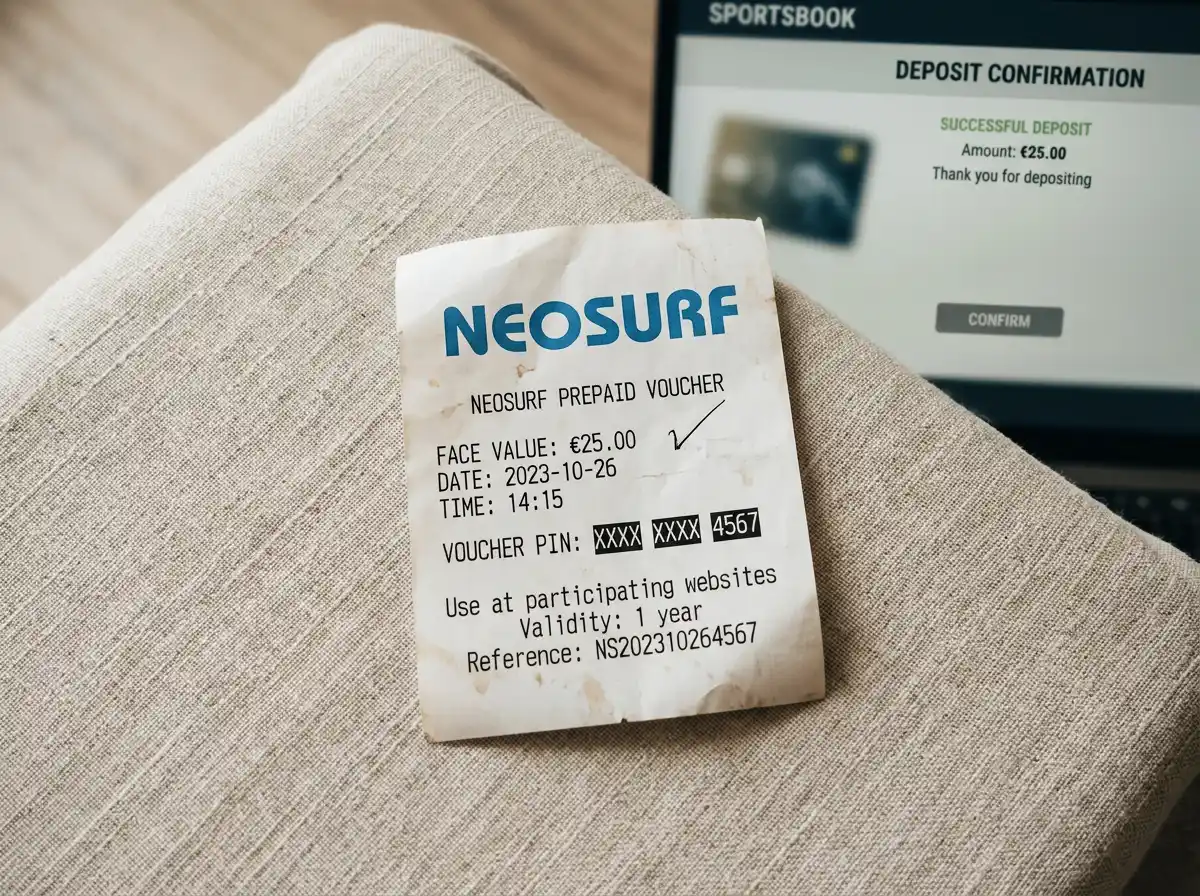
The question every new user asks in week two
The question arrives in my inbox about every third week, and it’s always some variation of the same scenario. “I bought a A$50 Neosurf voucher and only used A$30 at the bookmaker. What happens to the remaining A$20? Is it still on the voucher? Do I lose it?” The short answer is that you almost never lose it, but the longer answer explains why so many users think they have.
The remainder sits in one of three places depending on what just happened. It might still be associated with the original voucher PIN, accessible at another site. It might have transferred into a myNeosurf wallet if the deposit path went through one. Or it might be nowhere useful to you if the bookmaker took the full voucher face value and issued credit to your account — in which case the A$20 became sportsbook balance, not voucher balance, and the mechanics are different. Understanding which scenario you’re in is the whole point of this article.
The wider context sits in our Neosurf betting guide for Australia.
How the balance survives after partial use
When you use a Neosurf voucher to deposit to an AU sportsbook, the default behaviour at most bookmakers is to accept the full face value, regardless of whether you wanted less. Type in a A$50 voucher PIN asking for a A$30 deposit, and the full A$50 usually lands in the sportsbook balance. The voucher is considered fully redeemed from the Neosurf side. There’s no leftover A$20 on the PIN anymore because the PIN as a whole has been consumed.
This surprises users who expect voucher-like behaviour — the “spend some, keep some” pattern familiar from gift cards. Neosurf doesn’t work that way at standard sportsbook deposits. The voucher is one transaction, fully used or not at all. The A$20 you didn’t intend to deposit is now in the bookmaker’s hands as balance, subject to the bookmaker’s withdrawal rules.
The exception is operators that explicitly support partial redemption, where you can specify the deposit amount and the voucher retains the unused portion. These exist but aren’t common in the AU licensed market. Most users will encounter the full-face-value default, which means the real question isn’t about protecting voucher remainder — it’s about not depositing more than you intended in the first place. Size the voucher to the deposit, not the other way around.
Using the PIN on another site, when that works
There’s a specific partial-redemption scenario that does let you reuse the PIN. At Neosurf-accepting sites that support partial redemption and at the myNeosurf load stage, the PIN can be entered with a specified amount less than the face value, leaving the remainder associated with the original PIN for a later transaction. Whether this works at a particular destination depends on whether that site has enabled partial redemption in its Neosurf integration.
Most licensed AU sportsbooks have partial redemption disabled — they treat the voucher as an atomic unit, take the full face value, and credit the sportsbook account accordingly. Some Neosurf-partnered sites outside the AU wagering market do support partial use. myNeosurf itself supports partial loads, letting you sweep only part of a voucher into the wallet and save the remainder for later use.
The practical test: if you’re depositing at a sportsbook and the cashier page asks you for both a PIN and an amount, partial redemption might be available. If it asks only for the PIN and shows you the face value as the incoming deposit, the voucher will be fully consumed. When in doubt, assume full consumption and size the voucher accordingly.
Transferring the remainder to myNeosurf
This is the cleanest solution for users who genuinely end up with partially-used vouchers — typically because they split redemption across multiple small deposits rather than a single large one. Loading a voucher into myNeosurf supports partial redemption natively: enter the PIN, specify the amount, the remainder stays on the PIN for future use. Up to the voucher’s expiry date, you can keep returning to it and drawing down as needed.
The catch is the 4.5% load fee. Every partial load costs 4.5% of the loaded amount, which means a voucher split across three partial loads pays that fee three times on the same balance. For small remainder amounts, the fee in absolute terms is modest — A$20 remainder loaded to myNeosurf costs ninety cents — but the percentage stings if you’re routinely splitting vouchers this way.
The broader operational framing of whether myNeosurf earns its place in your workflow depends on factors beyond partial-voucher handling, and the full comparison of when a myNeosurf wallet beats single-voucher use maps the thresholds where the wallet starts to pay for itself. Partial-voucher consolidation is one use case, but rarely the decisive one on its own.
Voucher expiry and what it does to residue
A Neosurf voucher has an expiry date, printed on the receipt and encoded in the voucher’s record. After that date, the PIN no longer authenticates deposits — it’s inert. If you have a partially-used voucher with residual balance on the PIN, that residual expires at the same time as the original voucher. There’s no separate clock for the remainder.
For AU users, the expiry period is typically substantial — often twelve months from issuance — but it’s not indefinite. Buying a voucher “for next season” and forgetting about it can lead to an expired-voucher situation where the remaining balance becomes unrecoverable through normal deposit channels. Once a PIN has expired, the residue on the voucher is effectively stranded unless you’ve been tracking the expiry date and acted before the cut-off.
Dormancy fees are a separate concern before expiry. Some Neosurf-issued products carry monthly inactivity fees on unused balance — more relevant to myNeosurf account balance than to voucher residue, but worth knowing. If you’ve loaded residue into the wallet and forgotten about it, the balance can quietly erode over months even without expiry coming into play.
A leftover balance still runs against voucher expiry rules.
Common loss scenarios
The first and most common way users lose residue is by not realising their bookmaker deposit used the full face value. They bought A$50 meaning to deposit A$30, saw A$50 land in the account, assumed the voucher had A$20 “left over” somewhere, and went looking for it later. It’s not there — it’s in the sportsbook balance, subject to the sportsbook’s withdrawal rules.
The second is misusing the PIN at a site that doesn’t support partial redemption. User tries to deposit A$10 of an A$20 voucher at a sportsbook that doesn’t do partial, the full A$20 goes in, and the user is surprised. Same mechanic, same outcome.
The third is letting residue sit in myNeosurf past the voucher’s expiry, then trying to redeem a voucher that’s no longer valid. The balance already in the wallet from earlier partial loads is fine — that’s wallet balance, not voucher balance. But the original voucher, if it still has unused PIN-bound residue, expires with the PIN.
The fourth is forgetting which voucher was which. If you buy three A$50 vouchers across a month and only partially use one, you need to keep the receipts straight to know which PIN still has residue. Sounds trivial. It isn’t, when you’re sorting through three thermal-printed receipts a month later and they all look identical.
The one discipline that resolves most of these situations: buy the voucher denomination that matches your planned deposit, not a larger one with margin. If you want to deposit A$20, buy a A$20 voucher. If you want to deposit A$50, buy a A$50 voucher. The voucher is designed as a one-shot unit, and the full-face-value default at most AU sportsbooks means you’ll end up using the whole thing anyway. Treat A$50 as a commitment to deposit A$50, not as a “buy with safety margin” purchase. That reframing alone eliminates nearly every partial-balance problem I see — the remainder question only arises when the voucher size and the deposit size don’t match.
Can I split a A$50 Neosurf voucher between two AU sportsbooks?
Only if at least one of the sites supports partial redemption, and most licensed AU sportsbooks do not. The default behaviour is to accept the full face value of the voucher on the first deposit. If you want to split a voucher across two sites, the workable path is loading it into myNeosurf first (which supports partial loads) and then sending portions to each sportsbook from the wallet.
What is the Neosurf voucher expiry date in Australia?
The expiry is printed on the receipt at the time of purchase. The validity period is typically substantial — often twelve months from issuance — though specific durations depend on the voucher’s issuance terms. After expiry, the PIN no longer works for deposits, and recovering residual balance requires a formal claim through Neosurf’s customer support process with the original proof of purchase.
