
Neosurf in AU Sportsbook Apps: Mobile Deposit Experience
 Available in US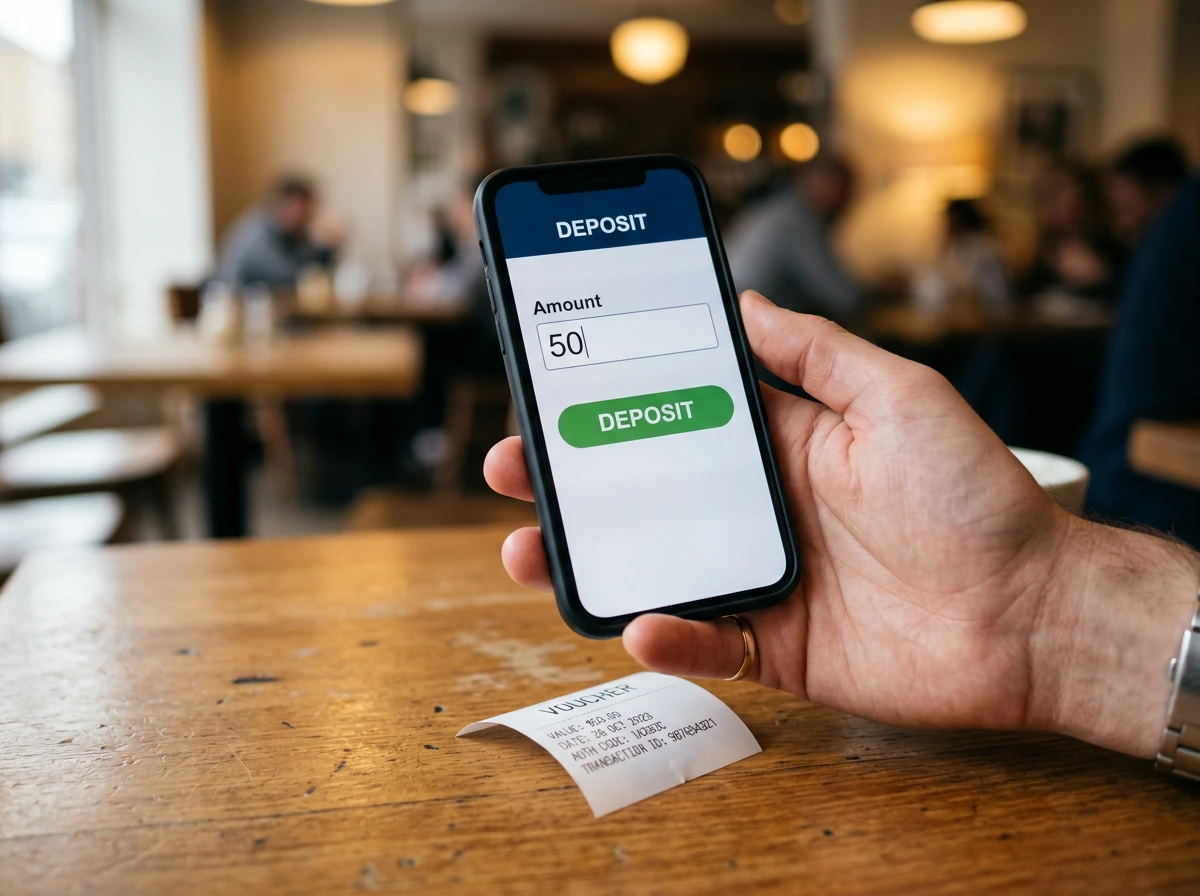
The mobile deposit is not the desktop deposit in a smaller window
There’s a moment I see repeatedly at a pub table during a State of Origin night. Someone pulls a folded newsagent receipt out of their wallet, squints at the PIN under dim lighting, and keys ten digits into a sportsbook app while three people crowd around talking about the match. That scene is the whole mobile Neosurf experience compressed into thirty seconds – and it’s the reason mobile deposits deserve their own conversation, separate from the identical-on-paper desktop flow.
The mechanics are the same. The PIN is the PIN. The bookmaker’s backend doesn’t care which screen you entered it on. What changes is the context – public locations, distracted attention, smaller screens, biometric shortcuts, and the operating-system policies that shape what a sportsbook app can even do on iOS and Android. The product logic of the voucher meets a different risk profile the moment it leaves a quiet home office.
The wider context sits in our Neosurf betting guide for Australia.
Sportsbook apps and the store-policy reality
Apple and Google take different positions on wagering apps, and that shapes what a Neosurf user actually gets to install. On iOS, Apple requires gambling apps to be geo-licensed per jurisdiction and submits them to its own review process – the upshot is that most major AU licensees have native apps available in the Australian App Store, and those apps handle deposits, including Neosurf, inside the app itself.
Google’s policy shifted meaningfully in 2021 and has evolved since. Real-money gambling apps are permitted in the Google Play Store in Australia for licensed operators, which means Android users today have roughly the same native-app access as iOS users. Five years ago that wasn’t true – Android punters had to sideload APKs or use mobile-web wrappers – and I still meet users who assume Android means no native app. It usually does mean a native app today, for a licensed AU bookmaker.
Mobile-web access is the universal fallback. If a specific operator doesn’t ship a native app for your platform, the mobile-optimised website through Chrome or Safari handles Neosurf deposits identically. The PIN entry form, deposit confirmation and balance credit all work through the browser. Slightly clunkier than a native app, functionally equivalent.
The mobile deposit flow, step by step
A punter opens the bookmaker app, taps cashier or deposit, selects Neosurf from the payment list, enters the 10-digit PIN, confirms the amount, and the balance updates. Five taps, maybe ten seconds of actual input. Under normal conditions the deposit clears within a minute, sometimes faster on a native app with a preserved session versus a fresh web-browser login.
The subtle mobile-specific variations: some apps remember the deposit-method selection and default to Neosurf if it’s your previous choice, which shaves two taps off the flow. Others clear the selection every time and force a fresh path. The apps that handle this well reduce the mobile friction to a handful of seconds; the ones that handle it poorly add unnecessary interruptions at exactly the worst moment – thirty seconds before a race start.
One mechanical detail worth naming: the PIN input field on most apps is numeric-only but usually supports copy-paste. If you’ve scanned the receipt into a secure notes app or OCR’d the PIN from a photo, paste will work. I’d advise against the photo path for security reasons I’ll come back to, but the technical option exists.
PIN entry security when you’re not at home
The 10-digit PIN is the money. Anyone who keys it in first gets the deposit. That’s true everywhere, but it hits harder on mobile because mobile use is overwhelmingly in public or semi-public places – cafes, pubs, public transport, mate’s backyard – where line-of-sight attacks on a screen are trivially easy.
The behaviours I’d flag as avoidable risk: entering a PIN with someone standing behind you, entering a PIN on public Wi-Fi without a VPN, leaving a voucher receipt face-up on a pub table while entering the PIN on the phone, and – most common of all – taking a photo of the receipt for “backup” and leaving the photo in camera roll with automatic cloud sync enabled. That last one is the most frequent leak I see: the photo ends up in iCloud or Google Photos, the account gets compromised at some later date, and the voucher is long gone by the time the user realises.
The discipline is identical to what you’d do with a physical credit card in public, just applied to the receipt and the PIN entry. Shield the screen. Delete screenshots immediately after deposit. Don’t photograph the receipt. The specific scenarios where voucher PINs get intercepted and the storage habits that actually prevent it are worth absorbing if mobile is your default deposit surface, because the public-context risk is consistently higher than home-desktop use.
Biometric login and how it interacts with prepaid funds
Face ID and fingerprint login inside a sportsbook app don’t touch the Neosurf deposit flow directly – they’re account-access controls, not payment-method authentication. What they do affect is whether someone else picking up your unlocked phone can reach the already-deposited balance.
If you lose your phone and the sportsbook app is set to biometric-only, whoever finds it can’t bet your balance – the lock holds. If it’s set to “stay logged in” with no reauthorisation, the balance is exposed the moment the finder opens the app. Default to biometric reauthorisation for any wagering app, and don’t save the password autofill in a way that lets someone with physical access bypass it.
A related question I hear often: does the bookmaker log biometric authentication in a way that could compromise your Neosurf anonymity claim? Short answer, no – biometric unlock is local to the device, not transmitted to the operator’s servers. The bookmaker sees a logged-in session. It doesn’t see your face or fingerprint.
On a phone the PIN security question gets sharper.
The offline voucher, the online app
There’s something almost pleasantly old-school about the product geometry: a paper receipt generated at a physical register, PIN printed in plain text, carried to a phone screen, typed into an app, translated into a digital balance. The voucher is offline infrastructure that meets online infrastructure at the exact moment of deposit, and for some users that’s the whole appeal of the method.
The practical implication is that the voucher doesn’t care about your device, your operating system, or your carrier. Whether you deposit from an iPhone on 5G, an Android tablet on home Wi-Fi, or a five-year-old smartphone on a patchy regional signal, the PIN is the PIN. I’ve had deposits clear on devices I wouldn’t trust to load a banking app, precisely because the voucher side of the transaction doesn’t require anything more sophisticated than a working keyboard and an internet connection.
Where the device does start to matter is the sportsbook app’s own requirements – minimum iOS version, Android API level, location permissions. Those are operator-specific rather than Neosurf-specific. If your phone meets the bookmaker’s app requirements, the voucher deposit will work. If it doesn’t, mobile-web usually does, and that’s the universal fallback.
Most casual Neosurf deposits I see at scale happen on phones, not computers. That’s simply where attention lives during a Saturday sporting afternoon. The voucher model accommodates it cleanly as long as the user builds the one mobile-specific habit that makes a real difference: shield the PIN entry, don’t photograph the receipt, and keep the sportsbook app behind biometric reauth. Those three habits turn the mobile deposit from a theoretically exposed flow into one that’s no riskier than the desktop version.
Are Neosurf deposits available in iOS sportsbook apps in Australia?
Yes, at licensed AU operators with native iOS apps approved for the Australian App Store. The deposit flow inside the app is equivalent to mobile-web: select Neosurf as the method, enter the 10-digit PIN, confirm the amount. A handful of smaller operators run mobile-web only, in which case deposits go through Safari rather than a native app.
Does biometric login on the app change how Neosurf funds are handled?
No. Face ID and fingerprint unlock sit between you and your sportsbook account, not between your account and the Neosurf deposit. The voucher deposit itself is authenticated by the 10-digit PIN entry inside the app. Biometric login is a general account-security feature worth enabling, but it doesn’t interact with Neosurf at the transaction level.
