
Buying a Neosurf Voucher: Cash vs EFTPOS in Australia
 Available in US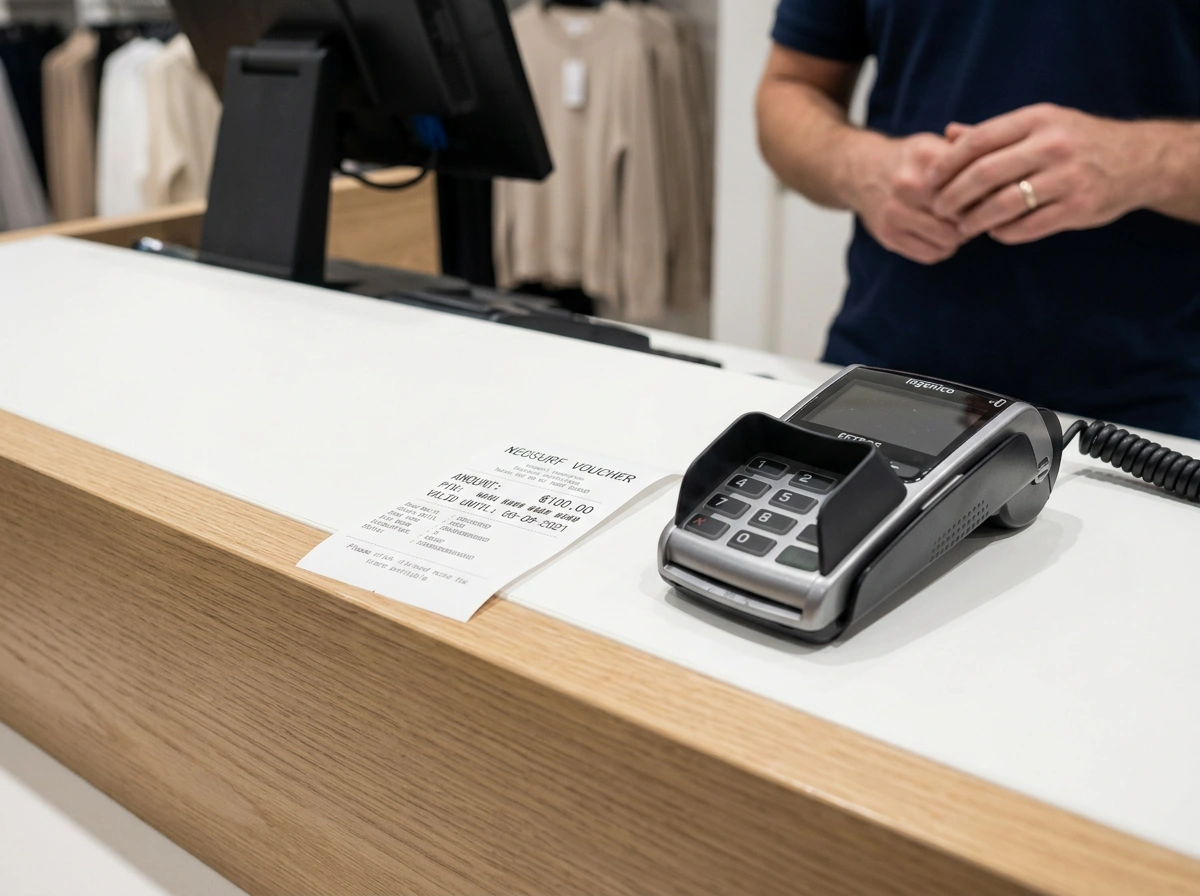
The payment method at the counter is a decision, not a detail
I watched a regular at my local newsagent stop mid-transaction last winter. Cash in one hand, debit card in the other, Neosurf voucher being printed behind the counter. He looked at both options and asked the owner which to use. The owner shrugged — “mate, either works.” He picked the debit card. Two days later he called me, upset, because his bank statement listed the transaction with a category code that flagged it as gambling-adjacent in his household budgeting app. He’d never thought about it before the cashier rang through.
The cash-versus-card question at a Neosurf register sounds trivial. It isn’t. The choice changes what gets recorded on a bank statement, changes your exposure to the 2024 credit card ban, changes how the transaction surfaces in any personal financial aggregation tool. And in a country where credit-card wagering is now explicitly illegal, understanding which rail your money took on its way to the voucher matters more than it used to.
The wider context sits in our Neosurf betting guide for Australia.
Cash purchase mechanics
Cash is the original design target for Neosurf. The product was built around physical currency as the entry point, and the retail workflow reflects that — cashier scans the voucher option on the POS, punches in the face value, accepts the cash, prints the receipt with the PIN. No bank-rail involvement, no merchant-processing step, no card-network trace.
The practical consequence for the purchaser: the transaction appears nowhere on any bank or card statement. The only paper trail is the retail receipt itself. That’s the entire privacy appeal of the voucher format — and the reason casual wagering users who specifically don’t want gambling activity tied to their banking have leaned into Neosurf since well before the 2024 credit-card ban.
The limits on cash purchase come from retailer discretion and AUSTRAC reporting thresholds, not from Neosurf itself. A A$50 cash purchase is trivial. A$200 in cash at one transaction may draw a mild second glance from a cashier. Purchases approaching A$10 000 in cash across any instrument — voucher or otherwise — enter threshold-reporting territory, though you’ll never reach that from Neosurf retail purchases alone because the per-voucher cap sits well below it.
EFTPOS debit purchase
Paying by debit card at the counter is the common alternative. Most NAR-listed retailers accept EFTPOS debit on voucher purchases, the transaction processes like any other small retail spend, and the voucher prints identically to a cash purchase. Functionally the outcome is the same — you walk out with a 10-digit PIN.
The difference is visibility. The debit transaction appears on your bank statement. The merchant name that shows varies by retailer — some display the retailer’s name (“Smith’s Newsagency”) without flagging the voucher, others display a Neosurf-branded descriptor, and a small number of POS systems display a category code that household-budgeting apps interpret as gambling-related.
That last category is the one that surprises people. Banks assign Merchant Category Codes to every card transaction, and a Neosurf voucher purchase through some retailers tags as MCC 6051 (quasi-cash / non-financial institution) or occasionally as MCC 7995 (gambling-related). If you’re using a banking app that colour-codes spending by category, a debit voucher purchase may show up as a gambling line item even though you haven’t yet deposited anything anywhere. Cash sidesteps that entirely.
Why credit cards are a hard no
On 11 June 2024, Australia’s ban on credit cards and crypto-funded online wagering came into effect. Penalties reach A$247 500 per breach for operators who accept credit for wagering deposits. That’s a headline fact, and it does the heavy lifting in explaining why credit cards and Neosurf vouchers destined for a sportsbook are functionally incompatible.
The mechanism: retailers in the NAR network are aware of the wagering-adjacent nature of Neosurf vouchers. Some POS systems will decline credit cards at the register for voucher purchases as a compliance default, regardless of what the purchaser intends to use the voucher for. Others will accept the credit card and then the compliance question flips to the sportsbook side — where the operator’s payment-gateway checks reject any deposit whose ultimate funding source is a credit card.
Enforcement of the ban has generated some public debate about effectiveness. Adit Maitra, who co-authored an e61 Institute study on the ban’s impact, argued that it’s not super clear that the ban has restricted borrowing to gamble in any sense.
That’s a view from the macro-economics side. For an individual punter at a retail counter, the practical reality is simpler: pay cash, pay debit, or don’t buy the voucher at all. Credit doesn’t work, and trying to make it work usually means wasted time at the register.
The figures on the ban’s quantitative bite are worth knowing: only about 2% of credit accounts were used for online gambling before the ban, and among those users, average fortnightly gambling spend dropped by roughly A$50 after implementation. Small share, measurable effect — the policy was more precise than broad, but it was precise enough to make credit a blocked rail for AU wagering-related purchases.
Retailer policy variance
Not every NAR retailer reads the rules the same way. I’ve had newsagents in Melbourne who refuse credit cards for anything over A$20, regardless of product. I’ve had 7-Eleven clerks in Sydney who’d happily run a credit card for a A$50 Neosurf voucher until I mentioned it was for a sportsbook, at which point the transaction was voided. I’ve had Woolworths service desks that treat the voucher as just another prepaid product with no restrictions on payment method.
The variance comes from each retailer’s own compliance training and their POS system configuration. Larger chains tend to have cleaner blanket policies — either “no credit cards on wagering-adjacent prepaid” or “credit cards accepted, compliance happens downstream.” Independent newsagents are more idiosyncratic, often driven by the owner’s personal risk comfort.
If you show up with only a credit card and no cash, the realistic outcome is either a rejected purchase or a purchase that completes but produces a voucher you can’t successfully deposit at a licensed AU sportsbook. For the full legal picture of where credit-card funding intersects with Neosurf-funded wagering under AU law, a structured overview is worth reading before you assume a specific retailer’s policy will translate into a working deposit.
Where to buy one is mapped in Neosurf retailers in Australia.
Bank statement visibility and what it signals
The most common question I field on this topic is whether buying a Neosurf voucher with a debit card will “flag” gambling activity to the purchaser’s bank. The honest answer is: maybe, and it depends on the bank and the retailer.
Most major AU banks do not automatically flag Neosurf purchases as gambling transactions at the account level. The MCC assigned to most newsagent and convenience-store Neosurf transactions is a general-retail code, not a gambling code. You typically won’t receive a “gambling activity detected” alert, and your account won’t be reviewed on the basis of a single voucher purchase.
What can happen is more subtle. Some banks track transaction patterns for risk-based lending, and repeated small Neosurf purchases through debit may contribute to an aggregate profile that affects creditworthiness at the margins. This is rare and not universally practised, but it’s a non-zero consideration for anyone whose wagering cadence is high and who’s also actively seeking credit products — mortgage applications, personal loans — at the same time.
For the vast majority of casual users buying one or two vouchers a month, bank-statement visibility of debit-card Neosurf purchases is a privacy matter, not a compliance matter. If privacy matters to you, use cash. If you don’t care about your bank seeing retail purchases at a newsagent, debit is fine. The one option that’s off the table is credit — and that’s a legal floor, not a personal preference.
Can I pay for a Neosurf voucher with a credit card at a Woolworths register?
Technically the register may accept the card, but if the voucher is intended for a sportsbook deposit, the downstream compliance check at the bookmaker will reject the deposit because credit-card funded wagering has been illegal in Australia since June 2024. Some retailers decline credit at the counter directly; others let it through and the problem surfaces at deposit time. Either way, credit isn’t a working path for wagering-purpose vouchers.
Will a debit-card Neosurf purchase show up on my bank statement as gambling?
Usually not as an explicit gambling flag. Most retailers’ POS systems process Neosurf purchases under general retail MCCs rather than gambling-specific codes, so the transaction typically appears as a standard newsagent or convenience-store purchase. A small minority of retailers or POS configurations may tag it more specifically. Cash purchases avoid this question entirely.
