
Neosurf vs Bank Transfer for AU Betting: Two Different Deposit Worlds
 Available in US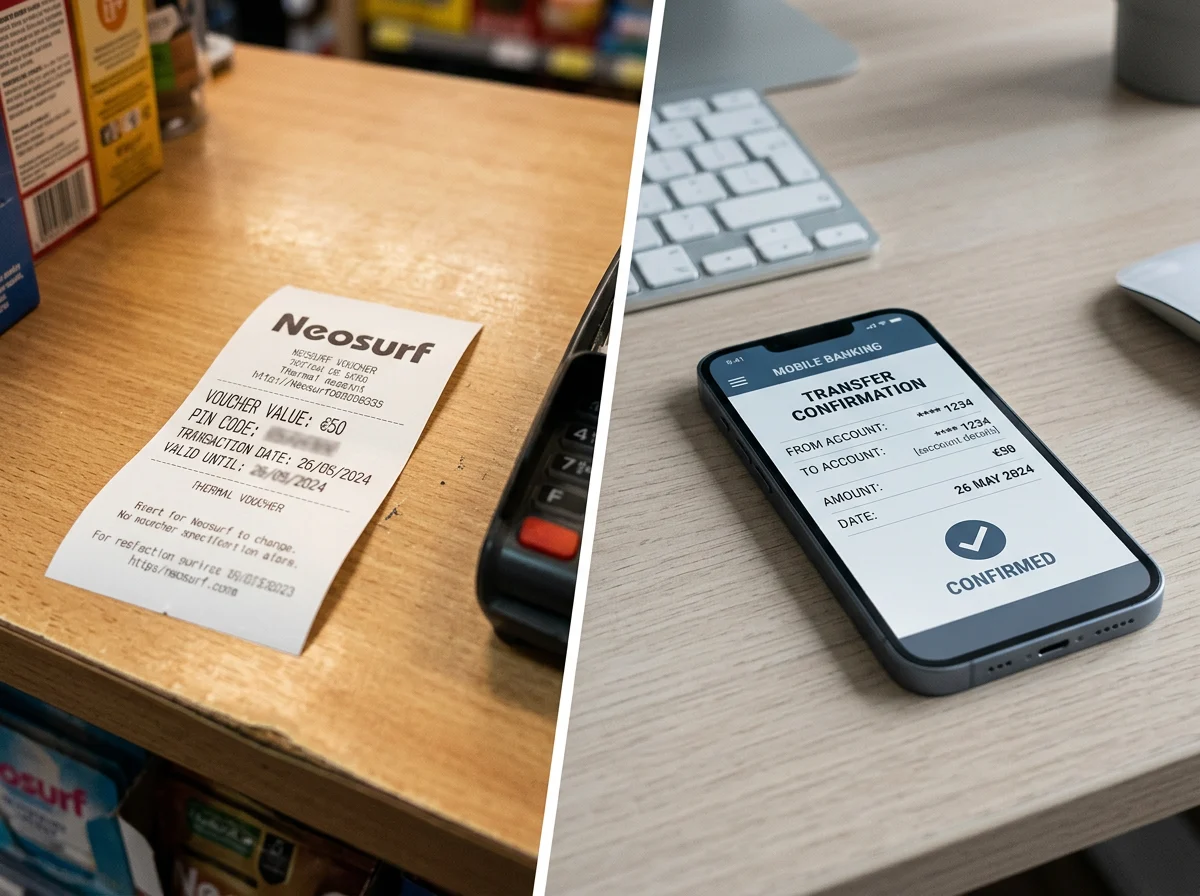
These aren’t two flavours of the same thing
A common framing mistake I hear: “Neosurf versus bank transfer — which is faster?” That question treats the two as competing versions of the same product. They aren’t. They’re fundamentally different models of how money moves from you to a sportsbook. Neosurf is a one-shot, cash-origin, no-bank-footprint instrument. A bank transfer is a direct rail between your ongoing bank account and the operator’s account, with everything that implies about visibility, continuity, and size. Which one fits you depends on what you’re actually trying to accomplish, not which one wins a speed test.
To the user who values privacy on deposits, Neosurf wins almost by default. To the user who moves larger amounts and wants a single persistent relationship with their bookmaker, bank transfer is cleaner. Trying to decide between them without first deciding what you’re optimising for is how people end up with the wrong product for their behaviour. Let me walk through the dimensions that actually matter.
The wider context sits in our Neosurf betting guide for Australia.
Two fundamentally different models of deposit
Neosurf is a voucher. You buy it with cash or debit at a retailer. The voucher has a fixed face value. You use it once — or twice, if the bookmaker allows partial redemption — and it’s done. There is no continuing relationship between the voucher and your bank account. The voucher was bought, the voucher was used, the voucher is gone. Your bank sees, at most, a small retail purchase at a newsagent. Everything downstream of that retail step is invisible to the bank.
A bank transfer — whether EFT, PayID-initiated, or direct-debit — is fundamentally a relationship. Your bank account is the source, the operator’s account is the destination, and the transfer itself appears on your bank statement with the operator’s name or a recognisable descriptor. Future deposits, future withdrawals, the pattern of activity — all of it lives on your bank statement as an ongoing record of your wagering.
That asymmetry is the central fact of choosing between these two methods. Neosurf is designed to not leave a banking trail. Bank transfer is designed to create exactly that trail. Neither is better in the abstract; each fits specific user priorities better than the other.
Speed comparison
Neosurf deposits clear at AU sportsbooks in 30 seconds to two minutes under normal conditions, with matchday peaks pushing that to three or four minutes. The retail step — buying the voucher — adds a separate time cost that can be anything from five minutes to half an hour depending on your proximity to a NAR retailer.
Bank transfers split into two speeds depending on the rail. PayID deposits, running on Australia’s New Payments Platform, land in seconds once initiated — genuinely faster than Neosurf for the transfer itself. Traditional EFT bank transfers can take anywhere from a few hours to a business day, and direct-debit authorised transfers sit somewhere in the middle. The fastest bank rail beats Neosurf on the transfer step alone; the slowest is meaningfully worse.
Total end-to-end time is where the comparison inverts. A bank transfer starts from your banking app, which is on your phone, which you have in your pocket — zero travel time. Neosurf needs a retail trip. For someone who’s prepared ahead (bought the voucher earlier), Neosurf is effectively instant; for someone deciding to deposit right now, bank transfer is nearly always faster because you don’t have to leave the house.
Amount limits
Neosurf caps out at A$500 per single voucher in the AU retail network, with most retailers carrying denominations up to A$100 or A$250. Combining vouchers is possible but adds friction. Functionally, the voucher method is comfortable for deposits up to A$200 or so, feasible up to A$500 with a single voucher, and awkward above that.
Bank transfers have much higher ceilings. A single bank transfer to a sportsbook can easily be thousands or tens of thousands of dollars, limited mainly by the bookmaker’s own deposit caps rather than the rail. For any deposit above A$500, bank transfer is the more natural fit.
The inverse is also true at the low end. Some bank-transfer-based methods have minimums of A$20 or A$50, whereas Neosurf meets the sportsbook’s A$10 floor cleanly. For small deposits, the voucher is the better-calibrated instrument.
Visibility on statements
This is where the choice becomes personal rather than technical. A Neosurf voucher purchased with debit appears on your bank statement as a small retail purchase at a newsagent or convenience store. The statement shows you bought something for A$50; it does not show you wagered. If someone else reads your statement — a partner, a parent, a financial adviser pulling account history for some unrelated reason — they see a retail line item, not a gambling transaction.
A bank transfer to a sportsbook appears with the operator’s name or a clearly gambling-related descriptor. “Sportsbet Pty Ltd” or similar shows up directly in your statement. Future withdrawals from the bookmaker back to your account do the same in reverse. The complete pattern of your wagering engagement — dates, amounts, frequency — is readable from the statement by anyone who has access to it.
Whether that visibility matters to you depends on your circumstances. Users who file their banking statements as part of mortgage applications, who share accounts with partners, or who otherwise don’t want gambling activity visible have a reason to prefer Neosurf. Users whose banking is entirely private and who don’t mind — or actively prefer — clear visibility of their own wagering patterns are better served by bank transfer.
On this point, Kai Cantwell’s broader framing about the licensed-market environment is worth noting: Unlike licensed operators, who use data to identify and support at-risk customers, illegal sites use it to target vulnerable Australians and minors with high-risk offers and exaggerated bonuses.
That applies to the choice between licensed and illegal sites rather than between deposit methods, but it connects to the data question: licensed AU operators see both Neosurf and bank-transfer deposits and apply consumer-protection frameworks to both. The privacy you buy with a voucher is from your bank, not from the bookmaker.
Bank transfer is also the usual payout route.
When each wins
Neosurf wins when you’re paying small amounts — A$10 to A$200 — with retail access and a preference for zero bank footprint on wagering activity. It also wins for users who value the hard-cap property of the voucher as a self-pacing tool, and for event-driven punters whose deposits cluster around major moments rather than ongoing weekly patterns.
Bank transfer wins when you’re depositing larger amounts — above A$500 — when you want speed without a retail trip, when you value a single consolidated view of your wagering activity in your own banking records, or when you want the smoothest path for both deposits and withdrawals on the same rail (PayID in, PayID out).
For many users, the honest answer is both. Small discretionary deposits for an AFL round: Neosurf. A larger deposit for Cup Day or Origin, where retail trip-planning is awkward but size is meaningful: bank transfer. The two methods aren’t mutually exclusive, and a user can have both available at the same sportsbook account without conflict.
The broader menu of prepaid alternatives, and how they stack against each other and against bank-rail methods, is worth understanding in a single frame if you’re deciding between multiple options. A structured comparison of Neosurf against other prepaid voucher methods and bank rails in the AU market fills in the picture that a two-way Neosurf-versus-bank-transfer comparison doesn’t fully cover.
Is a bank transfer always faster than a Neosurf deposit for betting?
Not always. The fastest bank rail — PayID on the New Payments Platform — lands in seconds, which beats Neosurf’s 30-second to two-minute window for the transfer itself. But once you include the retail trip for buying a fresh voucher, bank transfer almost always wins on total time. If you already have a voucher in hand, Neosurf can be as fast as or faster than a standard EFT bank transfer.
Do AU banks flag direct debits to sportsbooks more than card payments?
Direct debits to sportsbooks appear on your statement with the operator’s name and an explicit gambling-related descriptor, which is more visible than a card payment to a retailer where the MCC may or may not indicate gambling. Whether the bank ‘flags’ it depends on the bank’s internal risk processes, but the transaction is certainly more clearly readable as gambling activity on the statement itself.
