
Neosurf In, PayID Out: The AUSTRAC-Watched Combination
 Available in US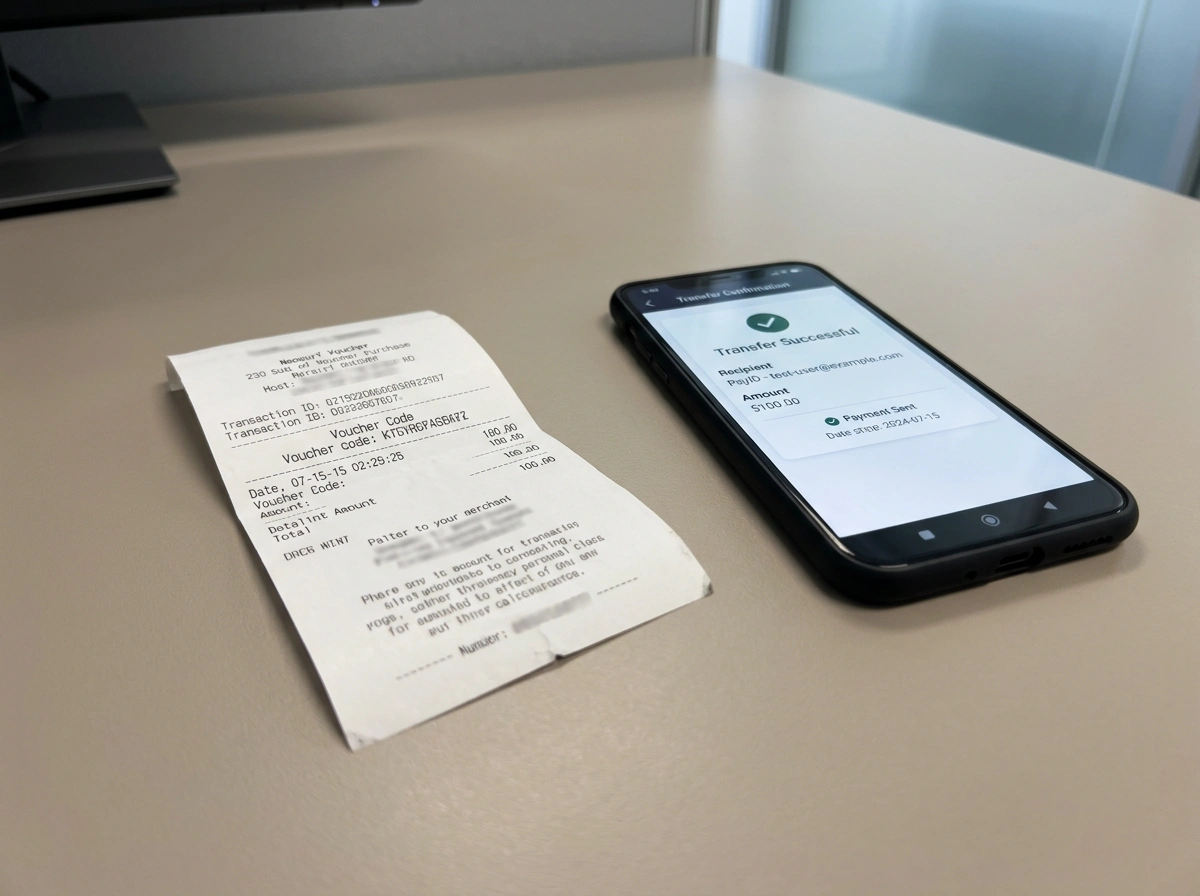
The pair regulators specifically watch
Here’s a fact that surprises nearly every punter I discuss it with: the combination of a Neosurf deposit on the way in and a PayID payout on the way out is specifically named in AUSTRAC’s public compliance priorities. Not because either instrument is illegal — both are fully legitimate — but because the pair, used at certain patterns and frequencies, maps onto the behavioural profile of a known money-laundering typology. The Fintel Alliance, AUSTRAC’s joint operation with law enforcement and financial institutions, has this combination in its active surveillance scope.
What this means for a normal AU punter is, in most cases, nothing operationally visible. You deposit a A$50 voucher, win, withdraw via PayID, money arrives in 30 seconds. No review, no flag, no delay. But understanding why the regulator watches this particular flow — and what behavioural patterns separate regular use from flagged use — is worth knowing if your cadence is unusual or your withdrawal sizes shift noticeably from your historical pattern.
The wider context sits in our Neosurf betting guide for Australia.
How the pair works in practice
Neosurf in, PayID out is the natural end-to-end flow for a punter who values privacy on deposits and speed on withdrawals. Voucher deposits sidestep bank statements on the deposit side. PayID withdrawals, using Australia’s real-time New Payments Platform rail, land in the nominated bank account in seconds rather than the hours or days a traditional bank transfer takes.
The end-user experience is straightforward. Deposit a Neosurf voucher to the sportsbook, bet, win, request a withdrawal, enter your PayID (typically an email or phone number linked to your bank account), confirm. The operator processes the withdrawal and the money arrives near-instantly. At the two ends of the flow, you’ve used cash-origin-in and real-time-bank-out — efficient from a user perspective, distinctive from a data perspective.
For a regulator, the distinctiveness is the point. A single deposit-and-withdrawal cycle at normal size looks like normal behaviour. A pattern of small, frequent deposits followed by small, frequent PayID withdrawals at consistent intervals — with minimal actual betting between deposit and withdrawal — can look more like a laundering typology than a genuine wagering pattern. The Fintel Alliance is structured to surface exactly that kind of pattern for review.
The Fintel Alliance focus
Under the Fintel Alliance Micro-Laundering and Illegal Gambling project, ACMA and AUSTRAC work jointly to identify and disrupt payments to illegal services, including attention to PayID used for high-frequency small transactions linked to gambling activity. That’s the formal framing. In practice, it means the Alliance examines transaction patterns across AU banks and wagering operators, identifies outliers, and coordinates responses that can include transaction blocks, account reviews, or referrals to enforcement.
Kai Cantwell, CEO of Responsible Wagering Australia, has framed the broader context of the enforcement challenge: Australia’s world-leading consumer protections are only effective if people stay within the system, and right now, it’s too easy to bypass them offshore with a few clicks.
The Neosurf-plus-PayID combination lives inside the licensed domestic system, not offshore, but the patterns that draw regulatory attention often trace flows where legitimate domestic rails connect to less-regulated activity elsewhere.
The honest reading for a regular punter is that the Alliance isn’t targeting individual low-volume users. It’s targeting patterns. A person making one Neosurf deposit a fortnight and one PayID withdrawal every couple of months isn’t the profile. A person making daily small Neosurf deposits with near-immediate matching PayID withdrawals without substantive betting activity between the two is much closer to the profile.
What triggers a review
Two categories of behaviour raise the likelihood of regulatory attention on this combination. The first is pattern — the rhythm and frequency of deposits and withdrawals relative to actual betting activity. The second is amount — absolute transaction sizes and the cumulative flow over short windows.
Pattern flags include: depositing and withdrawing substantially the same amount without intervening activity, repeated small deposits followed by consolidation-shaped withdrawals, and withdrawal cadences that don’t map to the operator’s typical match or race calendar (withdrawals Monday morning when the user only bets AFL Saturdays, for instance).
Amount flags tend to cluster around the A$10 000 threshold, which is AUSTRAC’s broader reporting threshold for cash transactions. Individual transactions don’t need to approach that number to aggregate into reportable territory — a pattern of smaller transactions summing to the threshold within a short window can trigger aggregation flags even if no single transaction is near the cap.
For a normal punter whose deposits and withdrawals both sit comfortably below A$1 000 each and whose betting activity is visible between deposit and withdrawal, none of this should produce any visible friction. The pattern of a genuine user placing genuine bets and occasionally withdrawing winnings is clearly different from the laundering typologies, and automated systems handle that distinction reasonably well. The broader question of what Neosurf actually hides and doesn’t hide from AUSTRAC’s visibility fills in the privacy context around all of this.
Impact on honest users
In practice, the Fintel Alliance’s work rarely touches individual low-volume users directly. What it does produce is a slight elevation in the baseline KYC rigour at AU sportsbooks — more documentation requested earlier, more questions about source of funds for larger deposits, more friction when a user’s transaction pattern changes meaningfully over time.
An honest user who deposits A$50 Neosurf vouchers most weeks and occasionally withdraws A$200 via PayID will see none of this. An honest user who suddenly deposits A$1 000 in a week after previously averaging A$50 may receive a source-of-funds inquiry from the sportsbook’s compliance team. That’s not a penalty or an accusation — it’s a routine check that resolves in a day or two once you provide context.
The source-of-funds question is the one I most often field from punters who felt caught off guard by it. The honest answer is usually simple: tax return, bonus at work, sale of something, savings. The sportsbook isn’t looking for a forensic trail — it’s looking for a plausible explanation consistent with normal life. Honest users with honest explanations clear these checks routinely.
The payout options themselves are in withdrawal alternatives.
Staying compliant: the boring best practice
Three practices keep a Neosurf-plus-PayID pattern on the right side of every automated review system. First, bet between deposit and withdrawal. If the voucher came in on Friday, wait until Sunday to withdraw — let there be evidence of actual wagering activity in the account history. This alone dissolves nearly all the pattern-based flags.
Second, size transactions to match your life, not to round numbers just under reporting thresholds. AUSTRAC systems are explicitly tuned to notice structuring — the practice of keeping transactions just below reporting thresholds. Depositing and withdrawing A$9 500 repeatedly to avoid the A$10 000 cash threshold is the textbook example of a pattern that draws attention despite no individual transaction triggering a threshold report.
Third, use one deposit method and one withdrawal method consistently. Rotating across Neosurf, bank transfer, debit card and several others with short cycles is itself a pattern. A predictable user who consistently uses Neosurf in and PayID out is a simpler, cleaner profile than a user jumping between methods for the same underlying activity.
None of this is about hiding from regulators. It’s about not inadvertently mimicking patterns that look like money laundering when what you’re actually doing is punting on the footy. The Fintel Alliance’s focus on the Neosurf-PayID combination is real; the individual-user exposure is low if your behaviour reads as genuine wagering. Boring, repeatable, documented — that’s the compliant pattern.
Can AUSTRAC freeze a PayID payout from a Neosurf-funded account?
AUSTRAC itself doesn’t directly freeze individual transactions at the user level; the operational tools are applied through the financial institution or the sportsbook under Fintel Alliance direction. In practice, a specific PayID payout might be held for review rather than outright frozen, and most holds are resolved within days once source-of-funds questions are answered. Individual low-volume users rarely encounter this.
Does splitting withdrawals into small PayID transfers raise red flags?
Yes, because structuring — deliberately breaking large transactions into smaller ones to avoid reporting thresholds — is specifically named as a flagged pattern by AUSTRAC. Breaking a A$5 000 withdrawal into ten A$500 PayID transfers over a short window may draw more attention than a single A$5 000 withdrawal would. Don’t structure. If you’ve won legitimately, withdraw in one transaction sized to match the actual win.
