
Neosurf 10-Digit PIN: How to Keep Your Voucher Secure
 Available in US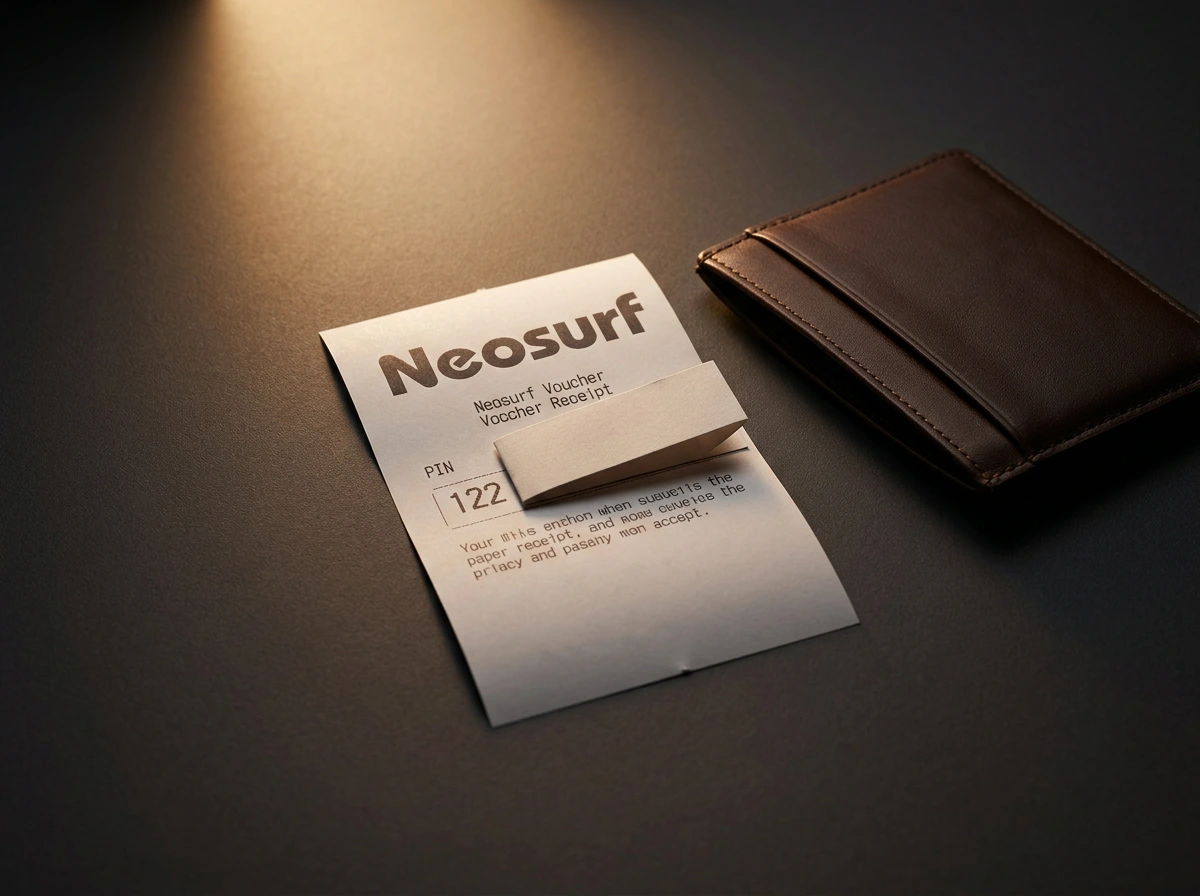
The PIN is the money, and that’s not a metaphor
A story from a few years back, still the cleanest example I can give. A punter shared a photo of his A$100 Neosurf voucher in a betting-advice group chat, blurring the PIN with his thumb. He didn’t notice that the original image metadata, visible to the group’s admin tools, hadn’t stripped the unblurred version. Within six hours the PIN was redeemed at an offshore site. He contacted Neosurf support, he contacted the offshore site, he contacted his mates. None of that mattered. The PIN was gone; the money was gone.
That’s the specific thing that makes Neosurf PIN security different from card security or bank-account security. A stolen credit card can be disputed, reversed, cancelled. A stolen Neosurf PIN has typically already been deposited somewhere by the time you realise it’s missing. The recovery pathways that exist for other financial products don’t exist here. Your entire protection is keeping the PIN unseen until deposit — full stop.
The wider context sits in our Neosurf betting guide for Australia.
The PIN as a bearer instrument
In financial-product terms, a Neosurf voucher PIN is a bearer instrument. Whoever holds it — whoever can type it into a Neosurf-accepting cashier page — owns the face value. The instrument is not tied to you by name, not protected by a secondary authentication step, not subject to a cooling-off period during which a redemption can be reversed.
That’s the same category as cash, as physical gold, as old-style traveller’s cheques. The security model is “keep it secret until you spend it”, because once it’s spent, it’s spent. There’s no signature verification, no SMS code, no fraud-detection pause. The 10-digit PIN is the authentication, and the act of typing it is the irrevocable authorisation.
That property is actually useful when you use it correctly. The deposit is fast because no additional step is required. The transaction is private because no account is needed. But those benefits rest entirely on the assumption that the PIN hasn’t leaked before you’re ready to deposit. Every security practice worth adopting is about preserving that assumption.
Common theft scenarios I see repeatedly
The first is the group-chat leak I described above. Someone shares a photo of the voucher, thinking they’ve hidden the PIN, and the original image or a zoomed view leaks through. Never photograph the PIN side of the receipt. Not for backup, not for documentation, not for “just in case”. If you need to record the voucher details, write them on paper separately or enter them directly into the sportsbook cashier page at deposit time.
The second is the cloud-backup leak. A user photographs the receipt intending a local-only snapshot, forgets that their phone auto-backs-up to iCloud or Google Photos, and a later credential compromise on the cloud account exposes the PIN. The photo was “private” on the phone but in fact sitting on a cloud service with its own attack surface. Turn off photo cloud-sync for gambling-related images, or better, never photograph them at all.
The third is the over-the-shoulder view in public. Entering a PIN on a phone screen at a busy cafe or pub with people behind you exposes the PIN to shoulder-surfing. It’s lower-tech than digital theft but fully effective. Shield the screen or step into a private space for the deposit step specifically.
The fourth is the accidental copy-paste leak. User copies the PIN to paste into the cashier, completes the deposit, then later pastes from clipboard into an unrelated context (a message, a search bar) and shares the PIN with whoever can see that context. Clear the clipboard immediately after a deposit, or copy a dummy string to overwrite the PIN.
The fifth is the voucher-scanning service. Some third-party sites and apps offer to “scan” a voucher to extract the PIN for you, framing it as a convenience. These services are almost always scams or aggregation schemes that collect PINs for later redemption. Never enter a PIN into anything other than a trusted sportsbook’s cashier page or Neosurf’s own site.
Why screenshots are dangerous even when they feel safe
The specific risk from screenshots goes beyond cloud sync. A screenshot sits in your camera roll alongside hundreds of other images, and every subsequent app that requests photo access has potential visibility to it. Social media apps, messaging apps, note-taking apps with camera-roll access, AI-assistant apps that scan images — any of them can technically access the screenshot if you’ve granted broad photo permissions, which most users have without realising.
Even within a single device, screenshots leak into contexts you didn’t intend. The recently-captured preview that pops up after you take a screenshot can be visible to anyone nearby. The Files app and Photos app both surface recent captures in ways that can expose a PIN image to anyone who picks up the phone.
The discipline that works: if you ever take a screenshot of anything involving a PIN, delete it within sixty seconds, and confirm the deletion propagates to your cloud service. Better: don’t take the screenshot in the first place. The voucher is designed to be used directly from the paper receipt, and that’s the path with the smallest attack surface.
Safe storage from register to deposit
The path that minimises risk is the shortest one. Buy the voucher, walk somewhere private (home, a quiet cafe corner, your car), enter the PIN directly into the sportsbook cashier, confirm the deposit, then discard or store the receipt appropriately.
If there’s a gap between purchase and deposit — you bought on the way home, you’ll deposit later — keep the receipt in your wallet, PIN side folded inward. Not on a counter, not on a table, not in a jacket pocket you’ll take off somewhere. The receipt should be treated as physical cash for the duration of the gap.
After deposit, the receipt has limited ongoing value. The PIN has been consumed (at most AU sportsbooks with full-face-value deposits) so the risk of theft disappears. What remains is the proof-of-purchase utility in case you ever need to raise a dispute with Neosurf or the bookmaker. I keep receipts for about a month after deposit, then dispose of them — shredded or torn, not intact in a bin.
A partly spent code raises the unused balance question.
What to do if a PIN is exposed
If the PIN has been visible to anyone else — a photo posted, a screenshot shared, a physical receipt lost — time matters. The fastest path to protection is immediate deposit at your intended sportsbook. Once the PIN is used, subsequent attempts to redeem it fail. The race is between you and whoever else might have seen the PIN.
If the PIN has already been redeemed by someone other than you — you try to deposit and the sportsbook says the voucher is already used — contact Neosurf customer support with the receipt details. The outcome depends on whether the redemption can be traced and reversed, and is not guaranteed. For any hope of recovery, you need the original receipt (proof of purchase) and ideally a timeline of when you became aware of the potential exposure.
The formal refund and recovery process for problematic voucher situations — including exposed PINs, partial use, and expiry edge cases — is worked out case-by-case through Neosurf support. A separate explainer walks through the practical steps for filing a refund claim on a Neosurf voucher in Australia and the realistic timelines and outcomes so you know what to expect if recovery becomes necessary.
Across nine years of watching how Neosurf PINs actually get lost or stolen, the single habit that distinguishes protected users from vulnerable ones is this: they treat the receipt as money from the moment they leave the register until the moment the PIN is deposited. Not as a document. Not as a record. As money. Cash doesn’t go in a screenshot. Cash doesn’t go in a group chat. Cash doesn’t sit on the pub table while you take a photo of your drink. Everything else in this article is application of that one mental model. The PIN is a bearer instrument, the voucher is cash, the receipt is the banknote. Handle it with the same care you’d give to a A$50 note in a crowded venue, and the security side of Neosurf becomes trivial. Skip that framing, and every photo or screenshot is a potential loss waiting to happen.
Can I recover funds if someone used my Neosurf PIN before me?
Recovery is possible in principle but not guaranteed. You need the original receipt as proof of purchase, a clear account of when and how the PIN was exposed, and a Neosurf support ticket opened as soon as you realised the issue. Outcomes depend on whether the redemption is traceable and whether the redeeming site cooperates with investigations. For practical planning, treat an exposed PIN as a loss until proven otherwise.
Is it safe to email or message a Neosurf PIN to myself?
No. Email and messaging services store copies of messages on servers outside your direct control, and any future compromise of your email account — through phishing, a breached password, or a service-level incident — could expose the PIN. The same applies to messages saved in cloud-synced chat applications. If you need to move a PIN between your own devices, do it in person or on a local-only note that doesn’t sync.
