
Is Neosurf Actually Anonymous for AU Betting? A Reality Check
 Available in US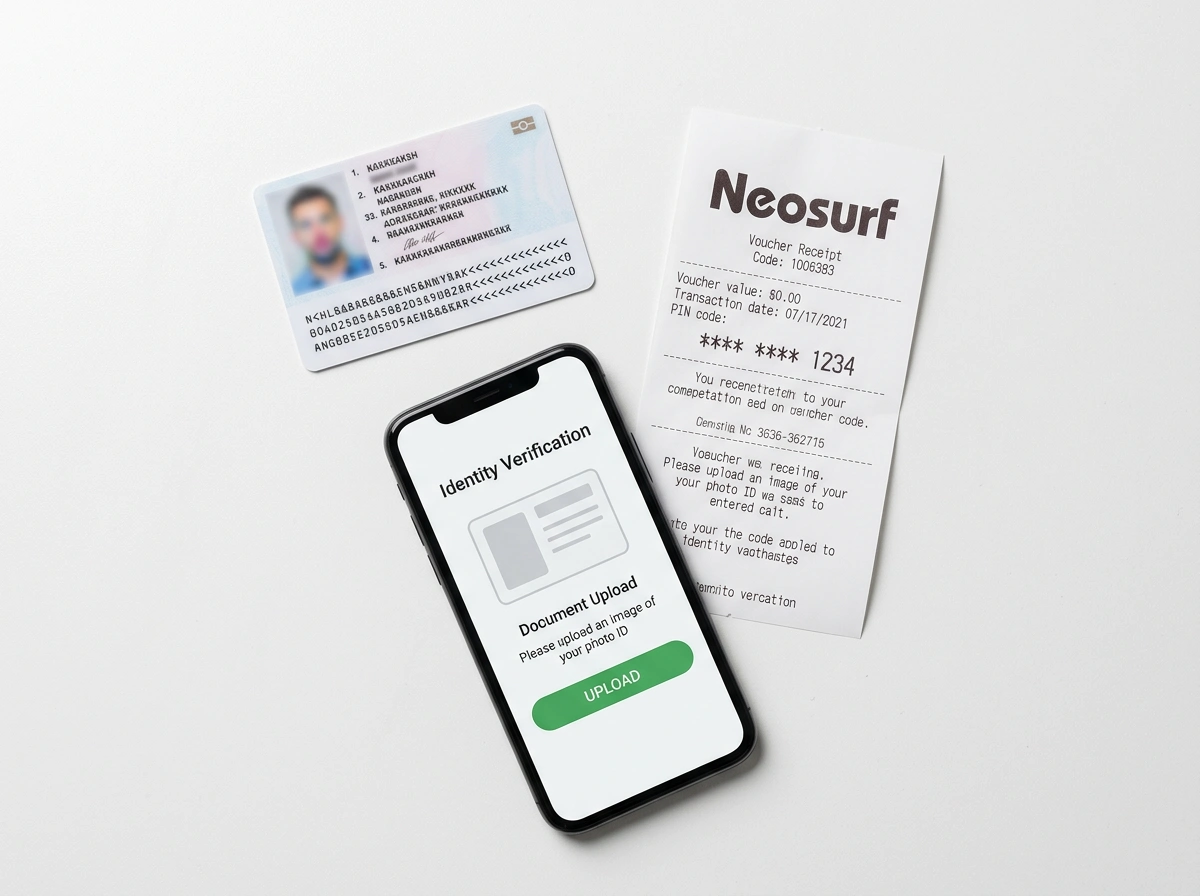
Two different meanings of the same word
The word “anonymous” gets used loosely in the voucher-product category, and the looseness causes a lot of confusion. When Neosurf marketing talks about anonymity, it means the purchase side — cash at a newsagent, no ID required, no bank record. When a user hears “anonymous betting”, they often assume the whole chain is anonymous, including at the sportsbook. Those two claims look similar on a marketing page. They are completely different in law and in practice.
The reality, which I’ll unpack across this article, is that Neosurf is genuinely anonymous at the moment of voucher purchase and essentially not anonymous at any step after that. Once the voucher leaves the register and enters a licensed AU sportsbook, the Australian AML/CTF Act takes over, and the bookmaker is legally required to identify the account holder regardless of how the deposit came in. The product is private, not anonymous, and the distinction matters.
The wider context sits in our Neosurf betting guide for Australia.
Anonymity at the retail step
Buying a voucher at an Australian NAR-listed retailer requires nothing except cash and the ability to communicate the purchase to the cashier. No ID is requested for typical denominations. No registration, no account, no digital record that ties you to the voucher beyond the retailer’s own POS transaction log. The receipt that emerges is a physical object that belongs to whoever is holding it.
That’s as anonymous as it gets in the modern Australian cash economy. The retailer logs the sale in their POS system, but the log doesn’t contain your name, phone number, email or any identifier other than the transaction timestamp and the voucher details. The voucher PIN itself is random and contains no reference to the buyer.
The anonymity breaks slightly if you pay with EFTPOS debit rather than cash. The debit transaction appears on your bank statement with the retailer’s merchant descriptor — it won’t say “Neosurf voucher” explicitly, but the amount and retailer identity are recorded. That’s not the end of the world, but if anonymity is the specific property you care about, pay cash and keep the retail side fully off-ledger.
KYC is required at the bookmaker, full stop
The moment you open an account at a licensed AU sportsbook to deposit the voucher, a different legal regime engages. Under the AML/CTF Act and its associated Rules, regulated wagering operators must verify the identity of every account holder before the account can operate normally. The verification doesn’t depend on how you’ll fund the account. It’s mandatory for every user, regardless of payment method.
Verification typically requires government-issued photo ID, proof of residential address, and matching details against official records. The bookmaker is required to complete this verification within a defined window — up to 14 days from initial account activity, though many operators prefer to complete it at registration. Accounts that haven’t cleared KYC by the deadline are restricted or frozen, and deposits may be effectively locked.
The full operational mechanics of the 14-day KYC window at licensed AU sportsbooks, including what documents are accepted and what happens when verification fails, is worth understanding separately. The short version for anonymity purposes: the 14-day window is a timing allowance, not an exemption. Every licensed AU account must eventually attach to a verified identity.
AML/CTF rules and what AUSTRAC actually sees
AUSTRAC is the federal agency that receives and analyses financial transaction reports from Australian reporting entities, including licensed wagering operators. The operator is required to submit reports on certain transaction categories — suspicious matter reports, threshold transaction reports for cash movements over AUD 10 000, and periodic compliance reports on account behaviour patterns.
For a typical Neosurf-funded account doing typical Australian sportsbook activity — A$20 to A$100 deposits, normal betting patterns, withdrawals to the user’s own bank account — AUSTRAC’s automated systems don’t flag anything. There’s no watchlist you get placed on for using Neosurf. The concern the agency has is aggregate pattern analysis, not individual account surveillance.
The agency’s broader posture on prepaid instruments was described publicly by CEO Brendan Thomas at a 2026 conference: In some cases, customers used prepaid cards, vouchers, and other opaque instruments to obscure the source of funds.
That’s the typology-level concern. It refers to patterns — especially patterns involving repeated high-value prepaid deposits combined with fast withdrawals to PayID or similar rails — rather than individual casual users. If you’re placing A$50 bets on AFL on a Saturday, you’re not the concern. If you’re making A$500 voucher deposits daily and withdrawing to a dozen different PayID identifiers, you are.
The pseudonymous versus anonymous distinction
A more accurate word for Neosurf at AU sportsbooks is “pseudonymous at deposit, identified at account”. Pseudonymous means the deposit rail doesn’t carry your identity — the voucher PIN contains no user information. Identified means the account receiving the deposit is tied to a verified individual through KYC. The deposit is private at the transaction level, but the account it funds is not private at all.
This compares usefully with credit card or bank transfer deposits, which are identified on both rails — the card number or bank account ties the transaction to your identity, and the sportsbook account also ties to your identity, with full correlation between deposit instrument and account holder. Neosurf breaks the correlation at the deposit instrument but doesn’t remove the identification at the account level.
Why does that matter? It matters for specific scenarios where you want the transaction not to show up on your bank statement — a bank record that lists “Sportsbet deposit” or similar is visible to anyone with statement access, including shared-account partners, mortgage brokers, or curious family members. Neosurf removes that transaction record because the money arrives at the bookmaker through a different rail. What it does not do is make the overall account invisible to anyone who actively looks at the account itself or who subpoenas the operator under legal process.
Verification arrives within the 14-day KYC window.
Offshore and the false sense of anonymity
Offshore operators often marketed “anonymous betting” as a feature, particularly before 2024 when ACMA enforcement tightened. The claim is that because the operator is not AU-licensed, AU KYC rules don’t apply, and you can bet without identity verification. The first half of that claim is technically true for the operator’s own procedures. The second half — that this delivers meaningful anonymity — is not.
The failure points are numerous. Offshore operators have been subject to data breaches with user details leaked publicly. Banking rails for withdrawals from offshore sites route through international payment processors that carry their own KYC requirements. When ACMA blocks an operator, users sometimes find their deposit records have been subpoenaed as part of the enforcement action. And the offshore market as a whole has been growing precisely because regulators have it in their sights — Australians are losing AUD 3.9 billion annually on illegal offshore platforms, double the 2019 figure, with enforcement pressure intensifying rather than easing.
The accurate summary: licensed AU sportsbooks are identified at the account level but privacy-preserving at the deposit level via Neosurf, sitting within a regulated compliance frame that protects user rights as well as constrains them. Offshore operators are nominally less identified but deliver worse anonymity in practice because of leaky infrastructure, hostile enforcement, and the regulatory risk that follows enforcement actions. Choosing between them on anonymity grounds almost always favours licensed AU, not offshore.
The property Neosurf actually delivers on the licensed side is a clean separation between the wagering channel and the banking channel. Your bank doesn’t see “Sportsbet” on your statement because the deposit came through a voucher, not a card. Your credit file doesn’t list wagering-related merchants because the voucher purchase is cash at a newsagent, not a payment-processor transaction. That’s real and useful for anyone who values that separation. What Neosurf does not deliver is invisibility from the bookmaker, from AUSTRAC, or from any lawful process that queries your account. The operator knows who you are. The regulator can see aggregate activity patterns. Any legal process that reaches the operator can obtain your full transaction history. These are features of the regulated AU wagering system, not deficiencies — they protect consumers as much as they constrain them. Understanding which property Neosurf gives you and which it doesn’t is how to use the product appropriately rather than relying on a marketing claim that was never quite as absolute as it sounded.
Can I bet anonymously on an AU-licensed sportsbook using Neosurf?
Not at the account level. Licensed AU sportsbooks are required under AML/CTF rules to verify every account holder’s identity, regardless of deposit method. What Neosurf provides is privacy at the deposit rail — the transaction doesn’t appear on your bank statement — but the sportsbook account itself is fully tied to your verified identity through KYC. Anonymous deposit, identified account.
Does AUSTRAC see my Neosurf-funded bets?
AUSTRAC receives aggregated regulatory reports from licensed operators covering threshold transactions and suspicious-matter reports. For typical sportsbook activity — moderate stakes, normal deposit and withdrawal patterns — individual bets are not reviewed by AUSTRAC. The agency’s interest is in aggregate pattern analysis to identify laundering typologies, not in casual wagering by ordinary users.
